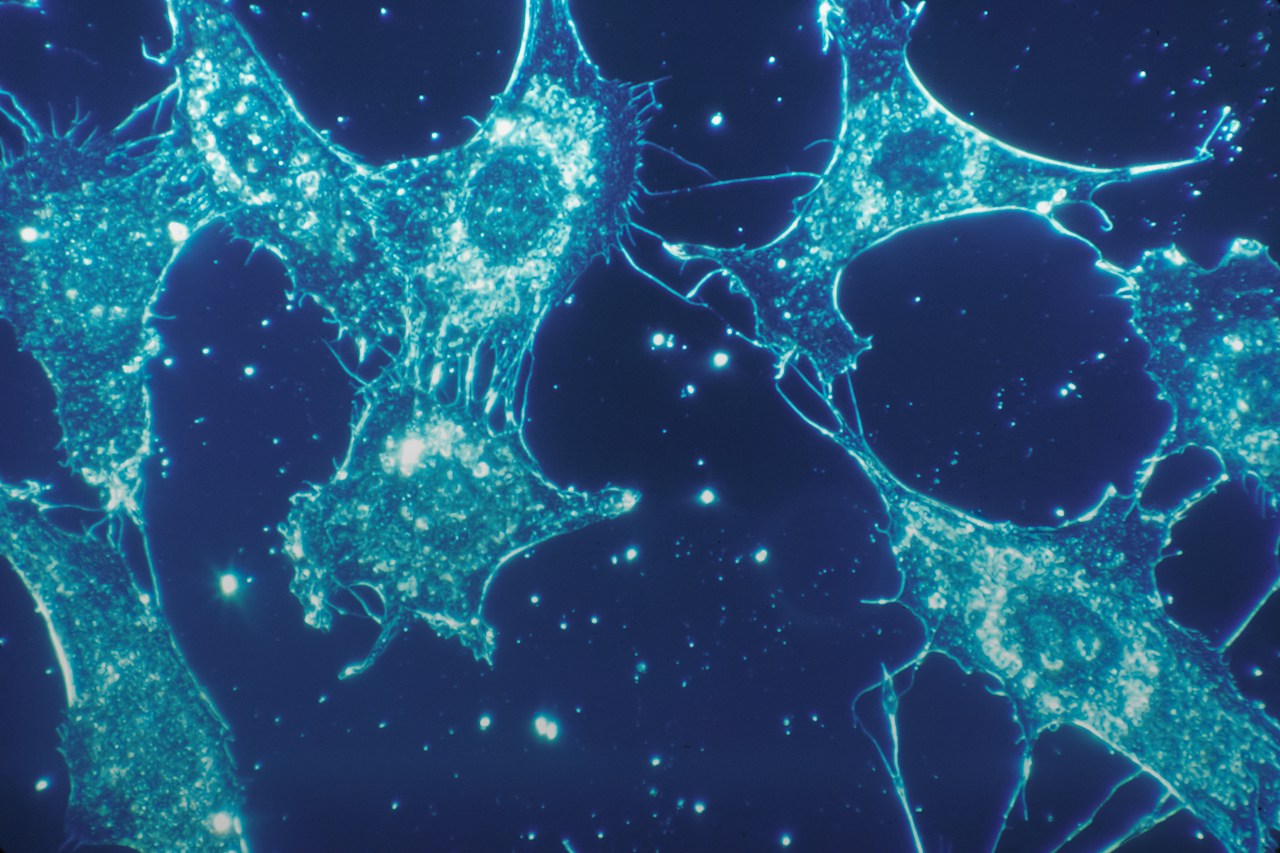
What defines a stem cell: two abilities#
A combines two abilities: — dividing to produce more stem cells of the same kind — and — becoming other cell types such as muscle, , or blood. It helps to picture stem cells as the 'source' cells of the body's tissues.
The name 'stem cell' does not refer to a single cell type. Their properties differ greatly depending on their origin, how they were produced, and the range of cells they can become.
How do they differ from ordinary cells?#
Body cells such as skin cells and red blood cells already have assigned roles. When they multiply, they only produce more cells of the same role — they do not become bone or . Stem cells, by contrast, have not yet taken on a role and can become several kinds of cells depending on the conditions.
However, not every stem cell can become anything without limit. Cells that can differentiate into many cell types, such as iPS cells and ES cells (pluripotent stem cells), work differently from those that differentiate into a limited range, such as stem cells in or fat (somatic stem cells).
- 1ES cellsDerived from early embryos. Broad differentiation potential; ethical considerations apply
- 2iPS cellsPluripotent cells made from body cells. Studied for disease models and regenerative uses
- 3Mesenchymal stem cellsCollected from bone marrow, fat, umbilical cord. Their secretions attract attention
Why they attract attention in regenerative medicine#
Stem cells have been studied as a core of based on ideas such as replacing lost or damaged cells, or supporting the body's repair through the signals cells emit. Some treatments, like transplantation, have a long history; others are still being investigated.
On the other hand, the phrase 'uses stem cells' alone does not tell you what is being placed in the body or how it is expected to work. It is important to check the cells' origin, processing, administration method, and target disease individually.
Major types of stem cells#
Stem cells are broadly divided into ES cells derived from fertilized embryos, iPS cells artificially created from body cells, and somatic stem cells present in adult tissues such as bone marrow and fat. The range of cells they can form, the ethical considerations, and safety differ by type.
The cells most widely used in current treatments are mesenchymal stem cells (MSCs) collected from bone marrow or fat. Even with MSCs, however, effectiveness varies with the target disease and administration method — the cell type alone cannot tell you whether a treatment works.
Going one step further#
Once you understand the basics of stem cells, the next question is whether a given cell is already used as a treatment or is still at the research stage. The same term 'stem cell' can mean something very different for an approved therapy and a research subject.
Going deeper#
Once the basics click, the next question is whether a given stem cell is already an approved treatment or still a research subject — the same word can mean very different things.
Reading the and Safety categories next, and checking unfamiliar terms in the glossary, will sharpen how you read future material.
Common questions#
Q. How established is this topic?
A. The concepts are established, but clinical application is at different stages by disease — keep concept and treatment separate.
Q. What should I read next?
A. Move on to Evidence and Safety categories to turn the basics into judgment material.